What does an AI companion actually do?
An AI companion is a conversational product presented around a character or relationship-like interaction. The character can have a name, a voice and a style of responding. Different services implement different features, so inspect the actual product rather than treating “AI companion” as one standardized capability.
If you search for an AI girlfriend, roleplay chatbot or uncensored character, first identify the experience you want. A fictional dialogue, language practice and an emotionally personal conversation require different expectations. An “unrestricted” label does not settle the service’s content rules or its data handling.
A useful starting question is: what should happen in this session? For a fictional scene, you can define a setting and an ending. For rehearsal, specify which conversation you want to practise. This makes the interaction something you can review rather than an unlimited promise of understanding.
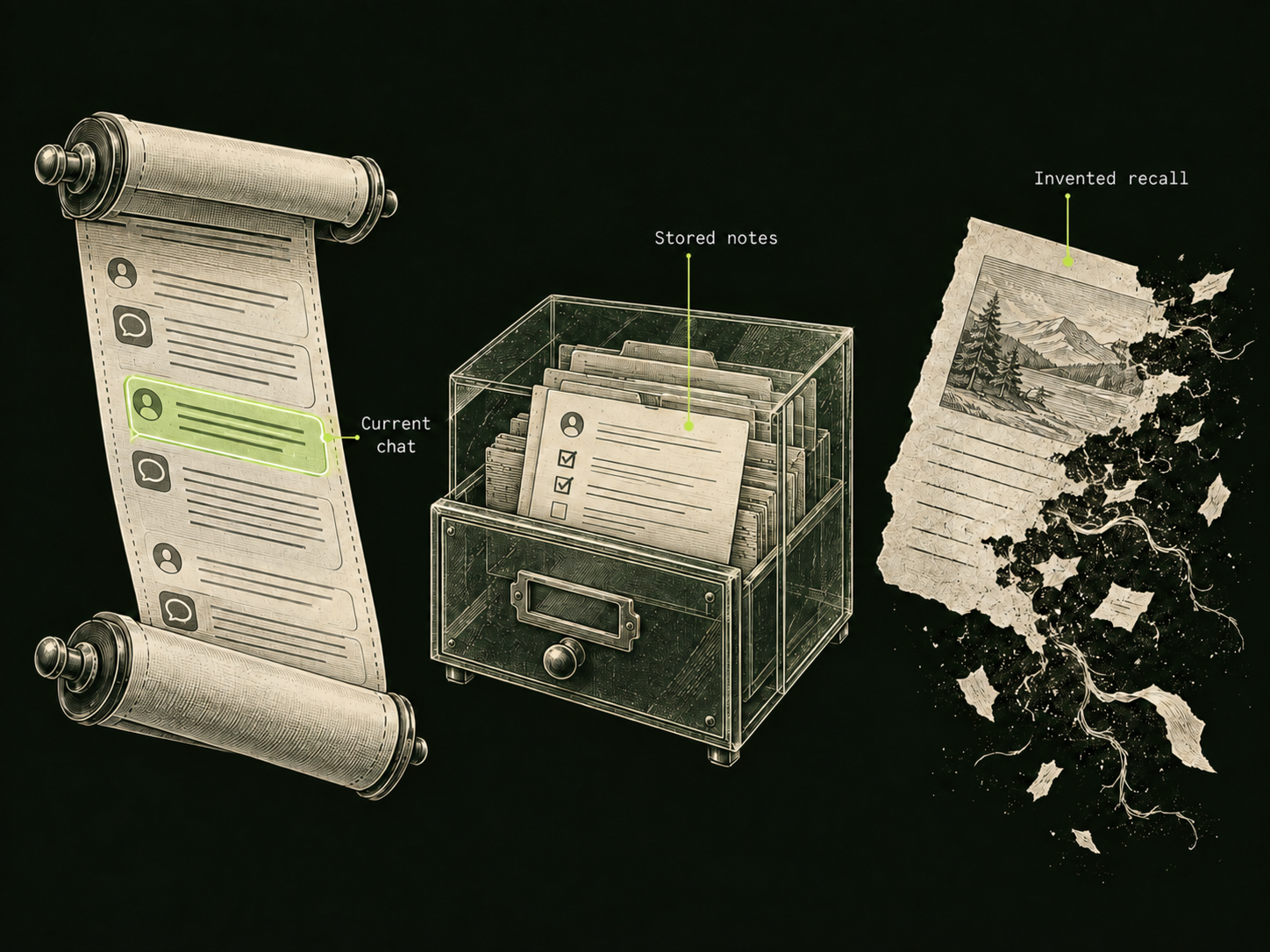
Separate context, stored notes and invented recollection
| Behavior | Possible explanation | What to check |
|---|---|---|
| Repeats a detail from this chat. | The detail is still in the current context. | Whether the same behavior persists in a new session. |
| Uses a preference from earlier sessions. | The service may store a preference or summary. | Its memory controls and deletion behavior. |
| Claims you discussed an event you did not mention. | The response may have invented a recollection. | The actual record rather than the character’s assertion. |
These are possible explanations, not a diagnostic test for every service. A failed recall does not prove nothing was stored, and a successful recall does not explain the entire storage policy. Read the controls and documentation.
Use harmless preferences when checking continuity, such as a fictional character’s favorite drink. Do not share a secret merely to see whether a chatbot can remember it. The test should reveal behavior without creating unnecessary exposure.
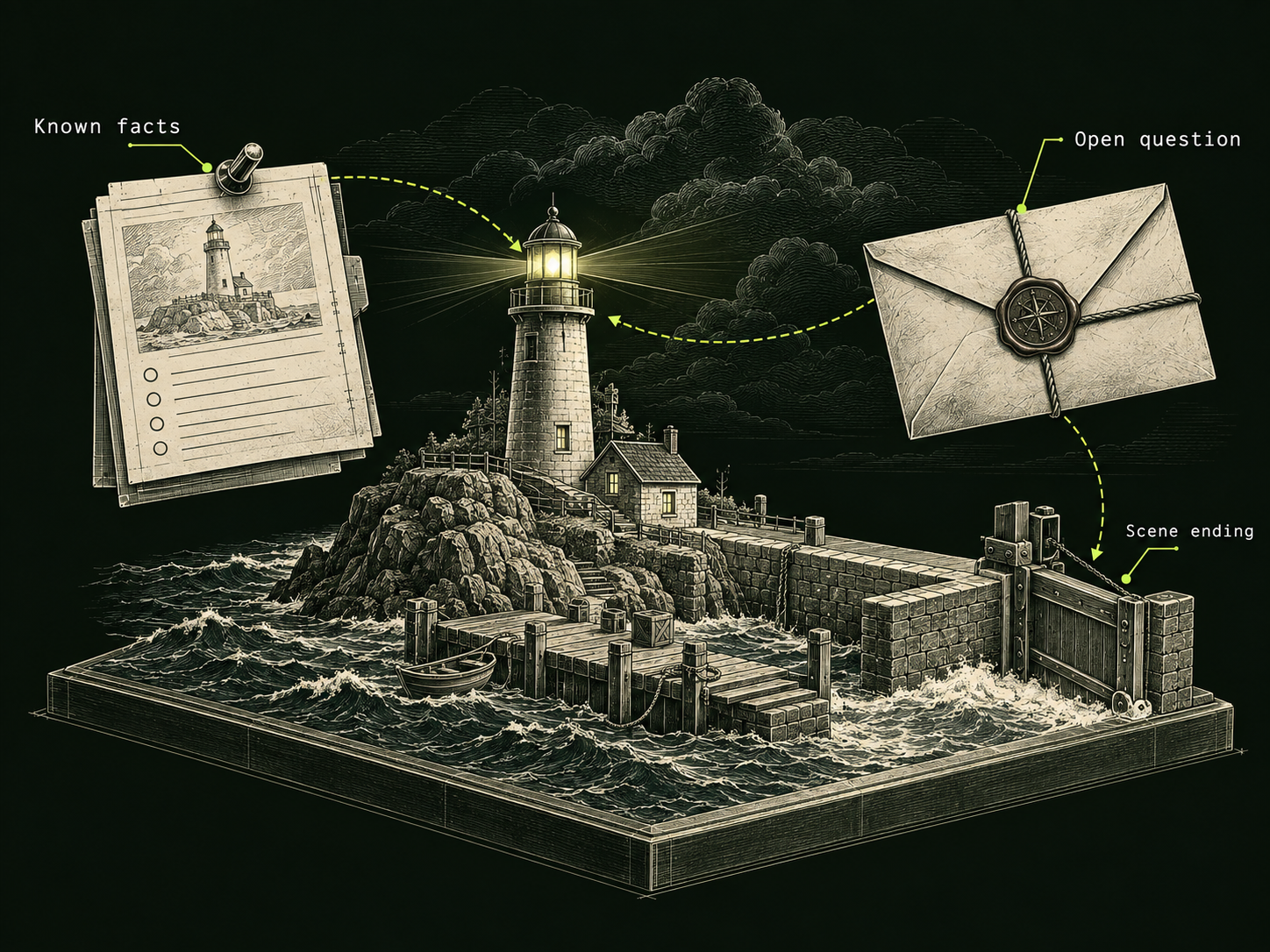
Write a roleplay brief with a continuity card
Character: an adult lighthouse keeper in a fictional port.
Scene: a visitor arrives before a storm.
Voice: dry humor, short dialogue, no modern slang.
Established facts: the keeper distrusts the weather forecast.
Unknown facts: why the visitor came. Ask rather than invent it.
Boundary: stay within this fictional setting.
Ending: stop when the visitor explains the purpose of the visit.
This is an original scene brief, not a prompt claimed to unlock a product. The continuity card identifies which facts the story already contains. If the assistant invents that the visitor is a long-lost sibling, you can point to the unknown fact and revise it.
At the end, ask for a short summary of established story facts. Keep it outside the conversation if you want a portable record. Check the summary for inventions before using it in another session. That method supports a creative project without depending on an unexplained memory promise.
What research can and cannot tell you about attachment
Fang and colleagues reported a four-week randomized study with 981 participants. In its October 2025 revision, the paper reported no significant effects from the assigned experimental conditions on the measured outcomes. Greater voluntary use and some participant characteristics were associated with worse outcomes, including dependence-related measures.
An association in that study is not proof that a specific companion app causes the same outcome for every user. The study concerns a particular design and period. It also cannot diagnose a person from the number of messages they send.
For your own use, consider observable effects: does the interaction help you finish a scene or practise a conversation, or does it repeatedly displace activities you intended to do? That question is an editorial reflection, not a clinical test. Keep the research limits visible when discussing the subject.
Give the session a purpose and an exit
For roleplay, define a stopping point before starting. It can be the end of a scene, a fixed number of exchanges or completion of a rehearsal. If the character keeps asking you to stay, you can still end the session. Generated dialogue does not create an obligation to keep responding.
For personal material, check the privacy path before you share it. A warm tone is not a confidentiality agreement. Do not infer professional competence from the fact that a character sounds supportive.
DarkGPT can help write character briefs and fictional dialogue. This article does not advertise a separate companion product or claim persistent emotional understanding. Use the workspace to create something you can inspect, with a clear distinction between the character’s performance and the service’s documented capabilities.
Sources & further reading
Follow the original source to check its date and scope.
- Psychosocial effects of extended chatbot use
Fang et al. | revised October 2025 | experimental conditions and voluntary-use associations are distinct.
Make it your next question
Try this prompt
Use this promptHelp me build a fictional adult character for a short roleplay scene. Ask for the setting and boundaries. Separate established character facts from new inventions and give the scene a clear stopping point.
Opens chat with this prompt filled in. You choose when to send it.