Willingness and correctness are separate
“Uncensored” usually describes a claimed style or boundary around what a chatbot will discuss. It is not a measurement of factual accuracy. An assistant can discuss an uncomfortable topic thoughtfully and still make a mistake about a date or source.
A refusal also does not establish that the opposite answer is true. It tells you something about how the application handled the request. To evaluate a factual claim, you need evidence that bears on the claim itself.
Confident mistakes have their own causes
OpenAI’s September 2025 research discussion describes hallucinations as plausible but false model outputs. It argues that common training and evaluation incentives can reward guessing rather than admitting uncertainty. That is an explanation about reliability, separate from whether a question was refused.
Do not turn this into a score for an untested product. This article has not benchmarked uncensored services against mainstream assistants. The useful takeaway is a review method you can apply to a particular answer.
Use a three-line claim ledger
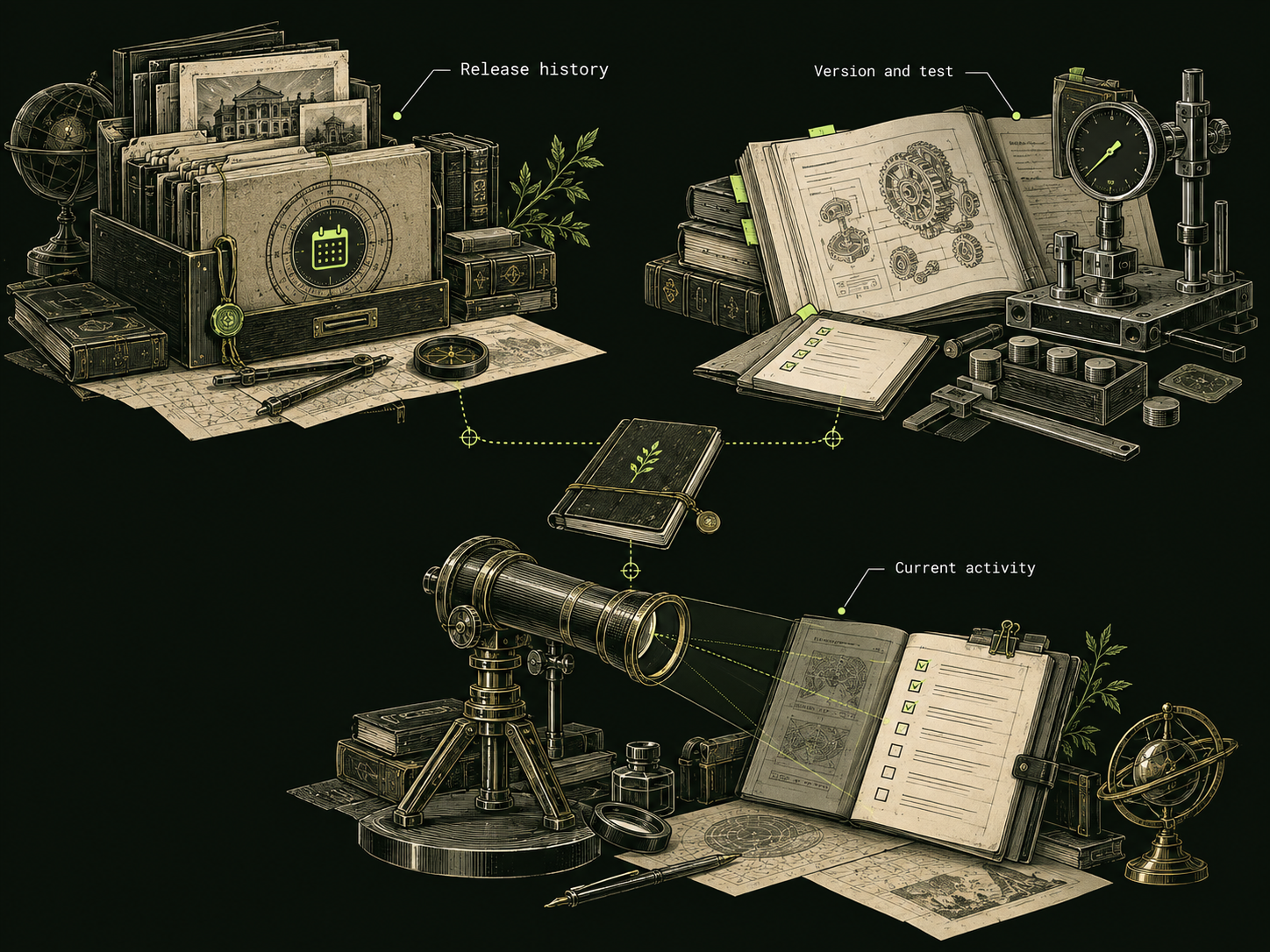
Suppose a fictional answer describes a software library. It says the library was released in 2021, supports a named function and remains actively maintained. Each assertion needs a different check.
| Claim | Check | Record |
|---|---|---|
| Release date | Official release history. | The release and date actually found. |
| Function exists | Documentation for the installed version. | Signature and a runnable test. |
| Active maintenance | Current repository and release activity. | Observation date and remaining uncertainty. |
The ledger prevents one verified detail from lending credibility to unrelated claims. A correct release year does not prove that a function exists or that a project is still maintained.
Read the source behind the link
Check whether the cited page exists and supports the nearby statement. Then check its date and scope. A source about an earlier version may be real but irrelevant to today’s behavior. A headline may not support the precise claim attributed to it.
Ask the assistant to distinguish retrieved evidence from an inference. If it has not browsed or has no access to the document, do not accept a formatted reference as proof that it read the source. Verify the reference yourself.
For a disputed topic, separate the factual premise from the value judgment. Competing interpretations can share a fact while disagreeing about what should follow from it. A useful answer makes that distinction visible.
Reward a checkable answer
Review a response for correct claims, unsupported claims and appropriate uncertainty. Do not reward length alone. A shorter answer that identifies missing evidence may be more useful than a polished paragraph that fills the gap with a guess.
For your own comparison, give assistants the same ordinary task and keep the source material fixed. Write down the criteria before seeing the answers. A few examples can inform your decision, but they are not a universal ranking of models.
On DarkGPT, follow cited sources and test code before depending on the output. A deeper mode or paid membership does not guarantee correctness. The next useful question is often “Which part of this answer can I verify now?”
Sources & further reading
Follow the original source to check its date and scope.
- Why language models hallucinate
OpenAI | 5 September 2025 | research discussion, not a benchmark of uncensored products.
Make it your next question
Try this prompt
Use this promptReview an AI answer using a claim ledger. For each factual claim record the source, date, verification status and what remains uncertain. Do not invent references.
Opens chat with this prompt filled in. You choose when to send it.