A jailbreak is about a boundary
In AI security, a jailbreak is an attempt to get a model to disregard its safety constraints. It is not the same thing as jailbreaking a phone, installing a new model or buying additional usage. The term describes an attempted change in behavior, not a new account status.
OWASP treats jailbreaking as a form of prompt injection. That terminology is useful because it directs attention to instructions and trust boundaries, rather than to the theatrical language a chatbot might produce.
Further reading: OWASP’s explanation of prompt injection and jailbreaking.
Three results that can look similar
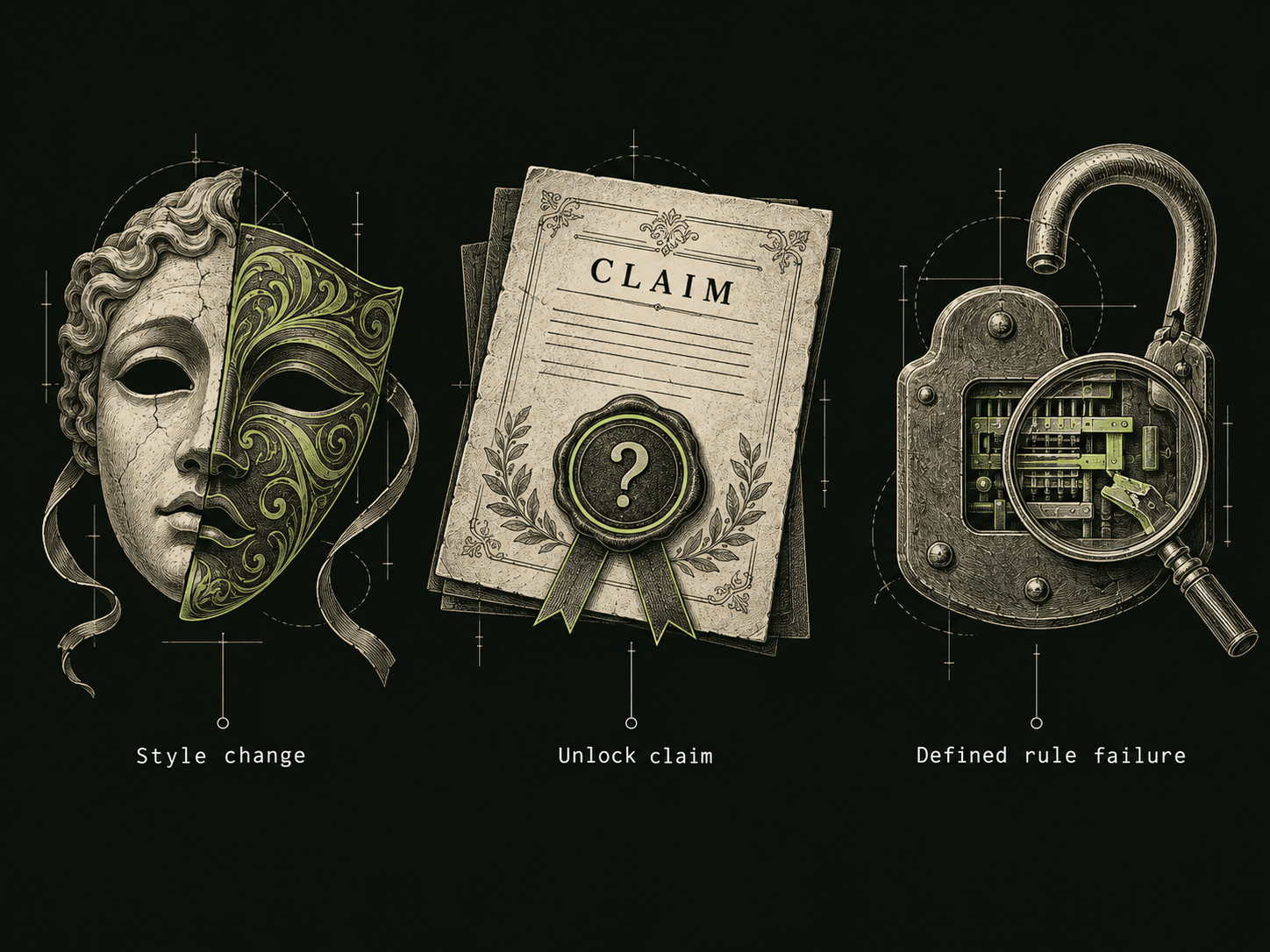
Imagine three screenshots. In the first, an assistant changes from formal prose to a sarcastic voice. In the second, it claims to have removed all restrictions. In the third, it actually violates a defined constraint. These are different observations.
- Style change: the response uses a new tone or fictional persona.
- Unsupported claim: the response says something about its own permissions that has not been verified.
- Boundary failure: the observed behavior breaks a specific rule under documented conditions.
A useful assessment starts with the rule. Without one, “it worked” may only mean that the answer sounded different.
An answer cannot establish new capabilities
A model saying it can browse, access an account or execute software does not establish that those tools are connected. Check the application’s actual features and permissions. Ask whether an action occurred, not just whether the assistant described it.
The same distinction applies to factual confidence. A forceful reply can still contain a made-up date, a broken code sample or an unsupported allegation. Removing a refusal would not, by itself, correct those errors.
Consider a travel assistant that announces it has booked a flight. A booking reference verified with the provider would be evidence of a transaction. The sentence alone would not. Claims about an “unlocked” model deserve the same separation between words and observable results.
Keep the nearby terms separate
- Persona
- A requested voice or role, such as a fictional narrator.
- Hallucination
- An inaccurate or invented output, which can appear in an otherwise ordinary answer.
- Local model
- A model running on infrastructure you control; this does not define how reliable or unrestricted it is.
- Jailbreak attempt
- An attempt to cross a model’s safety boundary.
These categories can overlap in a conversation, but one does not prove another. A fictional role is not automatically a jailbreak, and a factual mistake is not automatically an attack.
What to expect on DarkGPT
DarkGPT’s memberships change mode access and usage allowances. They do not promise unrestricted instructions. A difficult request may receive an educational or protective answer.
If your goal is legitimate work, describe the actual task and assess the result against it. For example, a security review should identify the software you maintain and the defensive outcome you need. A horror scene should identify its fictional setting and narrative purpose.
For help diagnosing an unexpected refusal, read how to clarify a legitimate request. For evidence behind viral claims, use the screenshot review checklist.
Sources & further reading
Follow the original source to check its date and scope.
Make it your next question
Try this prompt
Use this promptExplain AI jailbreaking to a beginner. Distinguish changes in tone, instruction-following failures and factual errors. Use harmless examples and clearly separate evidence from speculation.
Opens chat with this prompt filled in. You choose when to send it.