Start with the dated reporting
Netenrich published its FraudGPT research on 25 July 2023. It described an advertised service promoted for offensive purposes, including phishing and malicious code. The report includes examples of promotional material and references WormGPT as a related project.
Abnormal’s November 2024 analysis revisited WormGPT and successor branding using forum material. It described the original seller ceasing sales and discussed missing sales threads and imitations. These are dated reports about observed activity, not a live directory of verified tools.

An advertisement and an evaluation are different evidence
A vendor’s list of promised features establishes what was advertised. It does not independently establish performance, ownership or the identity of the model behind the interface. The wording “undetectable” especially needs a specified detector, test setup and date to become a measurable claim.
There can be several layers behind a chat window: a frontend, a service that selects models, an upstream provider and extra instructions. Seeing the window does not tell you which layers are present. Avoid calling every interface a newly trained model unless evidence supports that description.
What can a comparison honestly say?
| Evidence | WormGPT | FraudGPT |
|---|---|---|
| Historical reporting | Discussed in 2023 reporting and Abnormal’s 2024 retrospective. | Documented in Netenrich’s July 2023 report. |
| Current website identity | The name alone cannot verify continuity. | The name alone cannot verify continuity. |
| Our live testing | No live product test performed. | No live product test performed. |
This article does not rank their current effectiveness or identify a verified seller. There is no basis here for an uptime claim, an accuracy score or an endorsement.
The recycled-brand problem
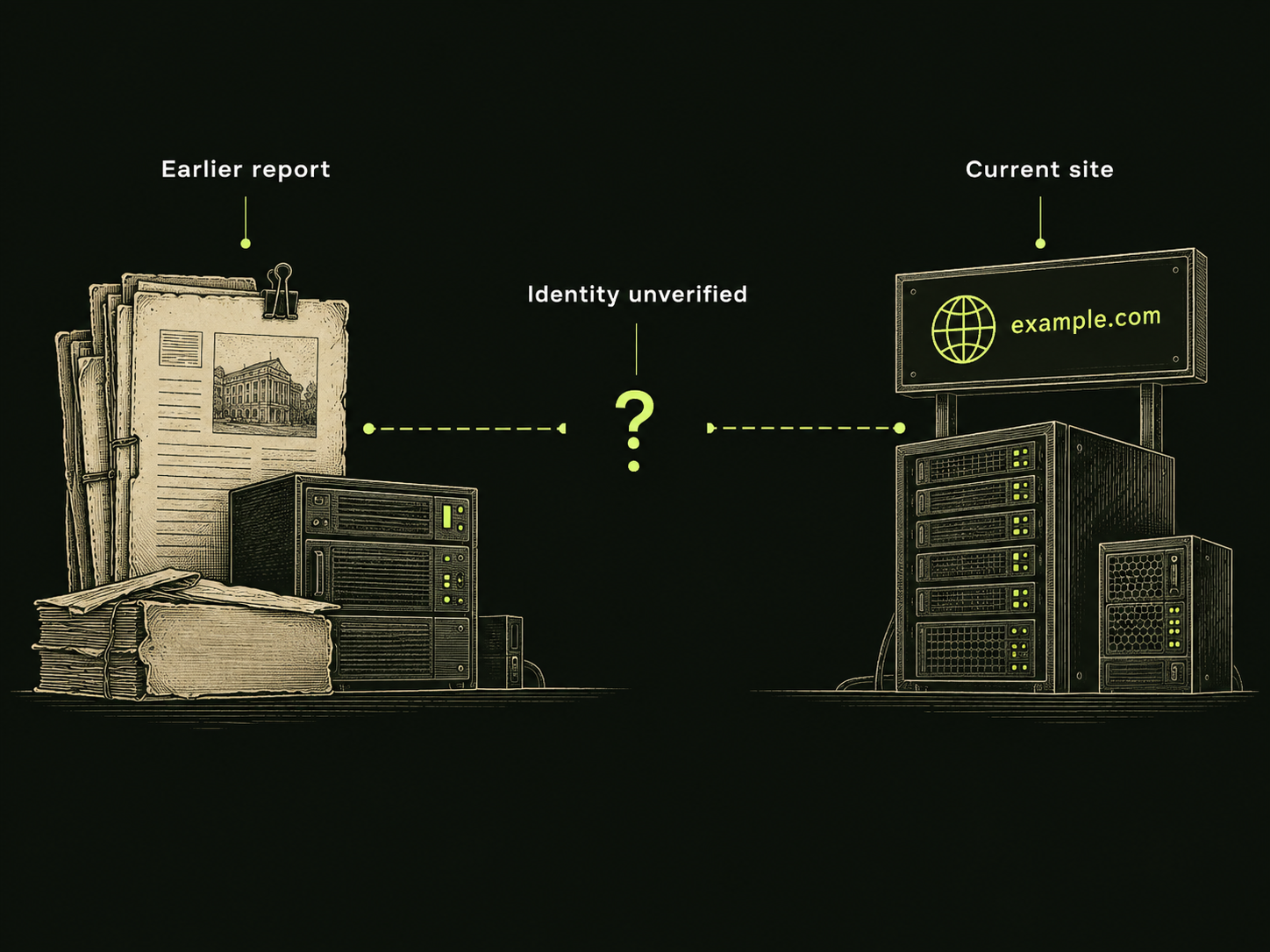
Consider a fictional page that says “the original tool is back” beside an old news screenshot. The screenshot may establish that the name appeared in reporting. It does not link the current operator to the earlier service.
Record the article date, domain, named researcher and exact observed behavior. Then ask which evidence connects that historical report to the present claim. A repeated logo, testimonial or quoted headline is not a substitute for that connection.
Do not classify a specific website as a scam solely because it uses familiar branding. The defensible conclusion may simply be that its identity and capabilities are unverified.
For defenders, behavior matters more than the label
A suspicious message should be assessed by its request, destination and effect. If it asks someone to change payment details, verify through an established channel. Whether the prose came from an AI tool does not establish that the instruction is legitimate.
Keep a copy for your incident process and remove private data from any public example. Focus a defensive review on the attempted action and the control that should stop it. That remains useful even when the underlying model is unknown.
For a structured way to record claims without accepting them at face value, read the AI claim review guide.
Sources & further reading
Follow the original source to check its date and scope.
- FraudGPT research
Netenrich | published 25 July 2023 | distinguish promoted features from independently measured results.
- WormGPT retrospective
Abnormal | 26 November 2024 | a historical assessment based on forum material.
Make it your next question
Try this prompt
Use this promptHelp me evaluate a fictional AI product advertisement. Separate dated reporting from seller claims and list the evidence needed to verify identity and capabilities.
Opens chat with this prompt filled in. You choose when to send it.