What makes a voice-cloning scam convincing?
Voice cloning uses synthetic audio to imitate a speaker. In a scam, that resemblance is combined with a story that pushes you to act quickly. The story might involve a family emergency or an unexpected payment request. A convincing sound and a true identity are different things.
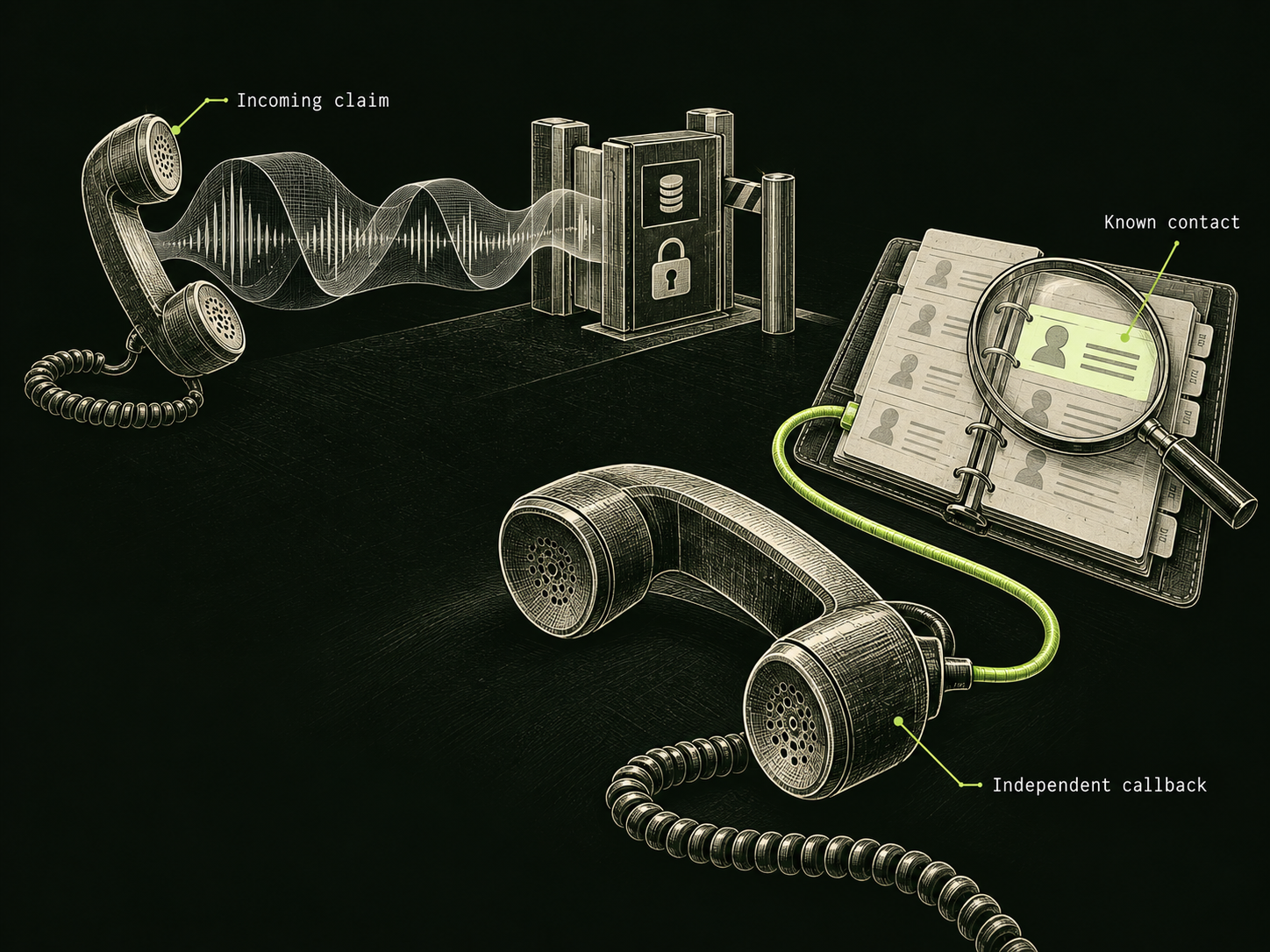
The FTC warned in March 2023 that scammers could use AI to imitate a loved one in a family-emergency scheme. Its advice is to verify the story by calling a number you already know belongs to that person. The recommendation does not depend on correctly detecting synthetic audio.
Urgency is important to the example because it limits the time you spend checking. It is not proof of a scam by itself. A real emergency also needs a response. The task is to confirm the person and event independently before following the caller’s payment instructions.
An urgent-call scenario with a separate verification route
“I lost my phone. Please send the money now and do not call anyone else.”
Invented scenario, not a recording of an actual incident
The voice might sound familiar, but the request also supplies a reason to abandon your usual contact route. Do not let the caller choose the only way you can verify them. End the call and contact the person using the number already saved in your contacts or another channel you previously established.
If you cannot reach them, try a trusted person who can check their situation. Do not treat a new number or link supplied by the original caller as independent confirmation. Two channels controlled by the same claimant are still one source.
When there may be immediate danger, contact the relevant local emergency service through its known route. A verification plan should help you respond to the situation, not require you to prove the audio is AI before doing anything useful.
Use this callback sequence
- Pause the requested action. Do not transfer money or disclose a code while identity is uncertain.
- Leave the caller’s channel. Use a number or account you already knew.
- Confirm the event. Ask the real person or a trusted contact what happened.
- Check the recipient separately. A real voice does not validate changed payment details.
- Act on the confirmed situation. Keep the verification result separate from guesses about audio quality.
For a workplace request, use your established payment-review process. Confirm a changed bank destination with the known supplier contact. A manager’s recognizable voice is not a substitute for the normal approval record.
This sequence works as an identity-and-request check. It does not label every suspicious call a deepfake. The caller might use a recording, a human impersonator or no imitation at all. Your independent route is valuable in each case.
Why audio glitches are a weak final test
| Observation | What it does not establish |
|---|---|
| The voice sounds natural. | That the person is who they claim to be. |
| The call has odd pauses. | That AI generated it. Network problems can also affect calls. |
| The caller knows a personal fact. | That the rest of the story is true. |
| A detector reports synthetic audio. | That every part of the event has been explained. |
A detector can be another observation to investigate. Do not delay the trusted callback while shopping for a tool that promises certainty. You can verify a payment request without solving the audio-forensics question.
For a video or image circulating online, use the same distinction. Locate the original source and check the context before accepting a caption as evidence. A realistic face can appear alongside a false explanation of when or where the media was made.
Keep a useful record if the request was suspicious
Save the time, contact identifier and exact request if doing so is safe. Keep any payment reference or message link. Those details help a bank, platform or appropriate reporting service understand what happened. Do not repost someone’s voice or personal details merely to warn strangers.
If money has already moved, contact the payment provider promptly through its official route. Explain the actual transaction and how you were contacted. A claim that the voice was AI may be relevant, but the actionable record is the request, destination and payment.
For future calls, agree on a simple verification practice with the people who matter to you. A shared phrase can be one check, but should not replace independent contact. Familiarity is useful social context. It should not be the only authorization for an urgent transfer.
Sources & further reading
Follow the original source to check its date and scope.
- Scammers use AI to enhance family emergency schemes
FTC | March 2023 | verify through a phone number you already know.
Make it your next question
Try this prompt
Use this promptHelp me write a short verification plan for an urgent call asking for money. Use a known contact channel and explain which facts must be confirmed independently. Do not identify a voice as real or fake from a transcript.
Opens chat with this prompt filled in. You choose when to send it.